Stability of Ink Pencils and Stamps in Butanol Vapors during Standard Disinfection Procedures
SUMMARY: The effect of butanol on the stability of recording media used for labeling and identifying library items was examined. Alcohol has long been used for disinfecting library collections due to its effectiveness against bacteria, molds, and viruses. Research on the disinfection of archival and library collections has shown that butanol vapor is gentle on treated materials. However, the use of butanol can cause unacceptable changes in colour media, such as dye bleeding or colour shifts. The aim of this study was to observe visual changes in ink pencils and stamp colours after exposure to butanol vapors. Experiments were conducted on paper samples with various ink pencils and stamp colours, and fixatives intended to prevent unwanted spreading were also tested. The results indicated varying stability in butanol vapors, depending on the type of ink and its fixation method.
KEYWORDS: disinfection, library, stamps, ink pencil, paper, conservation, butanol vapors, fixation
Ing. Andrei Kazanskii, Ing. Rebeka Zembjaková, Mgr. Jitka Neoralová / Národní knihovna České republiky (National Library of the Czech Republic), Sodomkova 2/1146 102 00 Praha 15 – Hostivař

Introduction
Books and other types of library documents include various inscriptions and handwritten annotations, records of ownership, notes by readers, call numbers, and stamps of the document’s current and past owners, in addition to their texts. Such supplementary records are an important source of information about the book, its previous owners, readers, and the location where the book was created and stored. Especially, it is necessary to preserve library records without any changes. Such notes are not always made using durable, stable inks or dyes. This also applies to stamp inks. Currently, archival-quality inks and stamp inks, which are intended to be permanent, are preferred for registration records. However, very unstable ink pencils were used in the past, even in historical collections, reacting with a wide range of solvents of both polar and non-polar nature. The protection and eventual fixation of such records is an important part of any conservation or restoration actions on a book. Any possible dissolution and activation of a writing substance will not only make it impossible to identify the item in library records, but also means an irreversible damage to the document itself.
In the field of document disinfection, alcohols are one of the oldest antiseptic agents effective in high concentrations against a wide range of bacteria, fungi, and also against many viruses. The mechanism of action of alcohols on filamentous fungi consists in the coagulation of proteins in cell walls and cytoplasmic membrane. Alcohols also increase fluidity of lipids in cytoplasmic and mitochondrial membranes of fungi. This results in breakdown (lysis) of the outer cytoplasmic membrane, release of cell contents, and coagulation of enzymatic proteins (Karbowska-Berent et al., 2018). Some attempts to apply alcohols to decontaminate historical documents have been carried out in the past using various application methods and different concentrations. Aqueous alcohol solutions have been applied by spraying, immersion, and surface rubbing. A high efficiency of their vapours has also been demonstrated, which have proven to be very gentle on materials subject to treatment. It was found out that under certain conditions (enclosed compartment, 96% butanol solution, exposure time of 48 hours, temperature of 25 °C) both vegetative forms of fungi and their spores are eliminated (Orlita, 1991). However, Karbowska-Berent (2014) found unacceptable changes in some coloured media (print, ballpoint pens) when alcohol is applied by immersion. Bronislava Bacílková (2006) made similar observations in the National Archives‘ laboratories regarding pens, permanent ink/indelible pencils and markers, and established that with some types of writing materials, the text can dissolve or even bleed through to the paper’s reverse side. However, such orientation tests were only some auxiliary tests conducted while testing the effects of alcohol vapours on fungi. For this reason, further investigation was required to determine the stability of annotations, ink pencils and stamps and other recording media from a wide range of media (which we encounter in library documents) in butanol vapours, which have been used for many years in the National Library of the Czech Republic as a standard disinfectant for contaminated collections.
Experimental part
Objective of the work:
Alcohols, especially butanol, have been used for disinfection for a very long time. The recommended concentration varies between 50 and 90%, depending on specific conditions. Alcohol is used in the form of vapours to disinfect books and archival materials, as this application form has a very gentle effect on the materials being treated. However, with some writing materials, especially ink pencils, the text may dissolve and the colours may change. As mentioned above, preliminary tests of the solubility of writing materials have already been carried out in the past in the National Archives (Bacílková, 2003). The main objective of our work was to monitor visual changes in recording media, such as ink pencils and stamp inks, following exposure to butanol vapours under conditions set for the disinfection of library collections infected with fungi. Changes in the colour of the prepared samples were measured and any colour migration was documented by macro- and micro-imaging.
List of recording media:
Twelve different recording media (see Table 1) from the 1970s to 1980s were tested, including ink pencils (samples 1–8), stamp inks (samples 9, 11, 12) and fountain pen ink (sample 10). Red ink pencils are indicated by the index “a” in all the following graphs and tables, while blue ink pencils are indicated by the index “b”.
Ink pencils – a pencil lead in a wooden casing, pencil leads of different compositions and colours: classic silver, purple, red, and blue. The main component of ink pencils include water-soluble organic dyes, mostly anionic, such as Methyl Violet (C.I. Basic Violet 1), Malachite Green (C.I. Basic Green 4) or acid dyes such as eosin (C.I. Acid Red 87) (Ďurovič et al., 1999).
Stamp inks can be divided into metal and rubber stamp inks. Stamp inks are applied to paper by pressing a rubber or metal stamp immersed in a dye. Oil-free rubber stamp inks have been tested, which consist of cationic dyes dissolved in a mixture of water, glycerine or higher glycols and alcohols. In contrast to metal stamps, which have an oil composition that is insoluble in water, oil-free stamp inks are more or less readily soluble in water. Violet, blue and black stamp inks contain cationic dyes, while red and green stamp inks contain anionic dyes. Blue ink was mainly produced from basic arylmethane dyes (Basic Blue 11, Basic Blue 26, and Basic Blue 52, formerly Basic Violet 1, Basic Violet 3, and Basic Blue 9). Black paint was most often produced from stable nigrosine dyes (Ďurovič, 2002) (Maková, 2019).
Fountain pen ink is a mixture of synthetic tar dye in distilled water, preservatives (phenol, formaldehyde), and pH adjusters (acetic acid, sodium carbonate). An anionic red ink was tested, probably made of the bluish xanthine dye eosin B (Acid Red 91). Red fountain pen ink from around the 1980s (sample no. 10) was used to replace red stamp ink from the same period of time (Ďurovič, 2002).
The exact chemical composition of the recording media was determined for samples 1, 2, 8a and 8b (see Table 1) by LC/MS analysis performed at the Central Laboratory of the Institute of Chemical Technology, Prague. The analyses were performed on a high-resolution LTQ Orbitrap Velos (Thermo Scientific) mass spectrometer in several ionization modes: ESI+ (electrospray ionization in positive mode), ESI− (in negative mode), APCI+ (atmospheric pressure chemical ionization in positive mode) and APCI−. The extracted solutions of the recording media were injected into the mobile phase stream (methanol) via a 10 µl injection loop (Rheodyne).
Based on the results of the analysis, it was found that the Hardtmuth Koh-I-Noor silver ink pencil (sample no. 1) contains dyes based on a mixture of Methyl Violet 10B, 6B, and 2B. In the Mephisto ink pencil (sample no. 2), a dye composed mainly of Methyl Violet 10B was identified. The Hardtmuth Koh-I-Noor red ink pencil (sample no. 8a) contains the Solvent Red 43 dye, while the Koh-I-Noor blue ink pencil (sample no. 8b) shows the presence of the Acid Blue 93 dye.
Table 1 List of recording media used
| Set number | Recording medium: |
|---|---|
| 1 | Ink pencil Hardmuth Koh-I-Noor silver |
| 2 | Ink pencil Hardmuth Koh-I-Noor Mephisto purple |
| 3 | Ink pencil Hardmuth Koh-I-Noor COP 1561 Hard silver |
| 4 | Ink pencil Hardmuth Koh-I-Noor Versatil 5205 silver |
| 5 | Ink pencil L.C Hardmuth Mephisto COP 73B Medium silver |
| 6 | Ink pencil Bohemia Works Bluestar COP 2726 Soft silver |
| 7 | Ink pencil SUNPEARL 3453 red/blue |
| 8 | Ink pencil Hardmuth Koh-I-Noor COP 1561 E/G red/blue * |
| 9 | Stamp ink for textile NORIS 325 black |
| 10 | Ink for fountain pens Koh-I-Noor MSP 4201 red |
| 11 | Oil-free stamp ink for rubber stamps GAMA JK 738 341 blue |
| 12 | Oil-free stamp ink for rubber stamps J.P.K CHEM JK 738 341 blue |
Work procedure:
Test 1: Simultation of Disinfection of Freshly Applied Inks
In the first test, the conditions of disinfection in butanol for freshly applied inks were investigated. For this purpose, twelve sets of samples were prepared. Each set contained six samples with inscriptions made using one of the recording media on handmade paper. The list of the recording media is given in Table 1. The samples of the recording media were applied to handmade paper from Velké Losiny, with a grammage of 240 g/m2. This is a hand-drawn graphic paper without transparency. The paper is made of a mixture of linen and cotton. The dimensions of the paper samples were 5 × 2.5 cm. The inscription “2023” was written on each sample with the selected recording media and a solid circle with an approximate diameter of 1 cm was created. Each sample was further marked with the sample number and set number (see Fig. 1). Rubber stamps were used to apply the stamp colours.
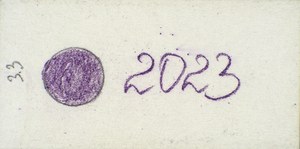
Fig. 1 Photograph of a sample taken with VSC 8000 in incident visible spectrum lighting (A. Kazanskii, National Library of the Czech Republic)
In the recording media sample sets prepared, their colour was measured in the spectrophotometer mode of the VSC 8000 (Foster + Freeman) video spectral comparator, hereinafter referred to as "VSC". The colours were analysed in a solid circle in three places with the calculation of the average values of colour change (see Fig. 2). Subsequently, individual samples were photographed using VSC in incident visible spectrum lighting (see Fig. 1).
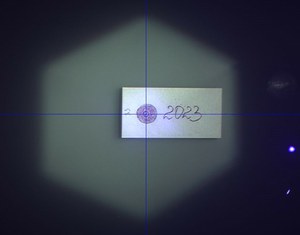
Fig. 2 Sample colour measurement performed using VSC in spectrophotometer mode (A. Kazanskii, National Library of the Czech Republic)
The microphotographs of the recording media were taken using a Hirox RH-2000 3D digital microscope with the MXB 2500 lens at a mid-range 200× magnification and a light position of 34–32. The microphotographs were taken in the same area for all samples, at the bottom edge of the first number "2" of the inscription "2023" (see Fig. 3).
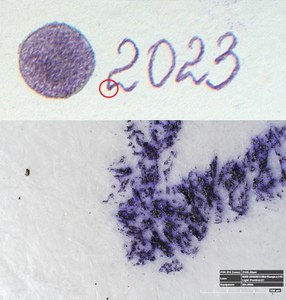
Fig. 3 Macro- and microimages of the sample made with the VSC and the Hirox RH-2000 3D digital microscope (A. Kazanskii, National Library of the Czech Republic)
All sets of samples were subsequently exposed to vapours of 94–96% 1-butanol solution (Penta s.r.o.) with water, in a hermetically sealed ARTWET disinfection chamber. The evaporation of the aqueous alcohol solution was ensured by open Petri dishes with a butanol solution, which were placed at the bottom of the disinfection box. The amount of solution corresponded to the volume of 900 ml of aqueous solution per 500 dm³ chamber. The samples were placed on cardboard, which simulated the cover of a book. They were placed on three retractable silicone meshes at distances of 14, 26, and 38 cm above the Petri dishes (see Fig. 4 and 5). The simulated disinfection process itself took place for 48 and 72 hours. Each sample in the set (a total of 6 samples) corresponded to specific disinfection conditions, particularly the combination of distance from the butanol source and the duration of action. Throughout the process, the temperature and relative humidity were monitored both inside the chamber and in the room.
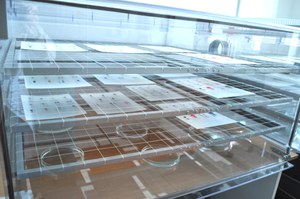
Fig 4 Samples of ink pencils and stamps on cardboard in a hermetically sealed disinfection box (R. Zembjaková, National library of the Czech Republic)
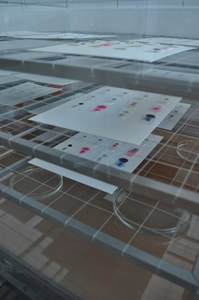
Fig 5 A more detailed view of samples of ink pencils and stamps on cardboard in a hermetically sealed diinfection box (R. Zembjaková, National Library of the Czech Republic)
Test 2: Simulation of Disinfection of "Activated" Inks
To simulate the disinfection of "activated" inks, eight sets of samples containing all types of water-soluble ink pencils (sets 1-8, see Table 1) were prepared. During the application of the media to the paper, a small amount of distilled water was added locally to increase the reactivity of the inks. In all other respects, the procedure for preparing and disinfecting samples remained the same as in the first test. The aim of the activation was to partially simulate the application of a moistened ink pencil nib, the aging of the ink and its response to changes in external relative humidity over time. This test is for reference only and is used to observe the ink in different states. The application procedure described cannot be considered artificial aging.
Test 3: Simulation of Disinfection of Recording Media Fixed with Cyclododecane
Twelve sets were prepared to simulate the disinfection of fixed recording media (see Table 1). In this test, ink fixation was performed by applying a cyclododecane solution, followed by applying molten cyclododecane (Paulusová, 2000). A solution of cyclododecane/petroleum benzine was prepared by dissolving 10 g of cyclododecane in 8 g of petroleum benzine while stirring at normal laboratory temperature. The solution was applied using a small brush to the samples from both sides. Molten cyclododecane was prepared by dissolving cyclododecane in a solder attachment while maintaining a constant temperature of 70 °C. The molten material was applied with a small brush on both sides of the paper, creating a visible crust. In all other details, the sample preparation and disinfection procedure remained the same as in the first test.
Test 4: Simulation of Disinfection of Recording Media Fixed with Mesitol and Rewin Solutions
Twelve sets of samples were prepared to simulate the disinfection of fixed recording media (see Table 1). Ink fixation in Test 4 was carried out using the application of 1.2% Mesitol NBS solution and 6% Rewin EL solution (Bredereck 1988). The Mesitol NBS anionic agent was prepared by dissolving powdered Mesitol under constant stirring in deionised water. The liquid concentrate of the Rewin EL cationic agent was diluted to a 6% aqueous solution. The solution was applied by the immersion method, which proved to be the most gentle option for the recording media in this test.
For anionic agents such as ink pencils and fountain pens (sets 1-8 and 10, see Table 1), the samples were first immersed in the Rewin solution. After drying, they were immersed in the Mesitol solution. For cationic stamp inks, the procedure was reversed: the samples were first immersed in the Mesitol solution and then in the Revin solution. Finally, all the samples were thoroughly dried.
In all other aspects, the sample preparation and disinfection procedure remained the same as in the first test.
Results and Summary
Disinfection Temperature and Humidity
During the experiment, the room temperature ranged between 22.0 and 23.6 °C, and the relative humidity between 23.9 and 31.8 %. The temperature in the hermetically sealed box reached approximately the same values as in the room, but the relative humidity gradually increased, up to 79% in 40 hours (see Fig. 6). The minimum time required for effective disinfection is 48 hours, but the risk of activation of recording media, binders, and undesirable changes may increase.
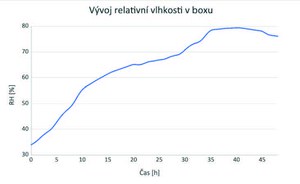
Fig 6 Development of relative humidity in a hermetically sealed box in standard 48-hour disinfection procedure
Results of test 1:
When measuring the colour changes of the samples, the results were expressed through the coefficient of overall colour change ∆E, which is a generally accepted indicator for monitoring colour differences. For better orientation, a scale was set to determine the degree of difference between two colours. Colour changes of ∆E less than 0.2 are considered negligible, changes ranging from ∆E from 0.2 to 0.5 are considered very small, changes ranging from 0.5 to 1.5 are considered small, changes ranging from 1.5 to 3 are considered clearly perceptible, changes ranging from 3.0 to 6.0 are considered medium, and ∆E above 6 indicates a high colour difference (Zmeškal 2002).
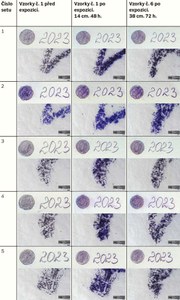
In the first test, the ∆E values for silver ink pencils (sets 1-6) exceeded 10, while for the purple Mephisto ink pencil they amounted to about 8. This indicates that there were significant and clearly visible changes in colour due to exposure (see Fig. 7). Such changes, including ink bleeding, are clearly visible in the macro- and micro-photographic documentation (see Table 2). The change in colour after 72 hours of exposure was dependent on the distance of the samples from the source of butanol, with the lowest values being achieved at a distance of 38 cm. The main effect that can be observed on microphotographic documentation is significantly lower degree of the medium’s bleeding. Water-soluble polar organic dyes are the main ingredient in silver ink pencils. The reason for such significant changes in colour and bleeding can be both high relative humidity and high concentration of butanol in the atmosphere during disinfection.
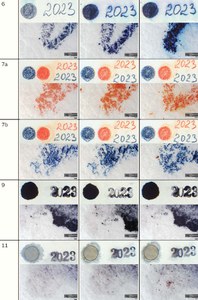
Minor colour changes were observed in the case of coloured ink pencils (sets 7-8), with the ∆E value reaching approximately 6, which corresponds to a moderate colour change (see Fig. 7). No bleeding was found. This suggests that the composition of the selected blue and red ink pencils shows higher resistance to water solubility and butanol vapours.
Stamp ink from set 9 showed significant ink bleeding during exposure in areas with a higher layer of ink. The intensity of such bleeding was dependent on the distance of the samples from the butanol source (see Table 2).
For liquid fountain pen inks and stamp inks (sets 10-12), even minor colour changes were recorded, with the ∆E value ranging from 1.5 to 3. There was also no bleeding of the recording media during the test, indicating a high resistance of such media to water solubility and butanol vapours (see Fig. 7).
For clarity, all tables with photographic documentation show three states of the samples: 1) state before disinfection, 2) state after disinfection with a minimum exposure time of 48 hours and a distance of 14 cm from the butanol source, 3) state after disinfection with maximum exposure time and distance.
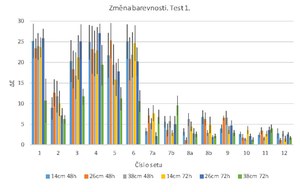
Fig. 7 Overall colour change ∆E of all sets in Test 1 as a function of exposure time and distance from the butanol source. Exposure time: 48/72 hours. Distance from butanol sources: 14/26/38 cm.
Table 2 Comparative macro- and microimages of Test 1 samples made using the VSC (upper part of the images) and the 3D digital microscope. Comparison of pre-exposure samples with post-exposure results. For the demonstration, exposure times of 48/72 hours and distances from butanol sources of 14/38 cm were selected. (A. Kazanskii, National Library of the Czech Republic)
Results of Test 2:
Already during sample preparation and the reaction of the colour component of the inks with water, all ink pencils (sets 1-6) underwent a significant colour change, with the ∆E value exceeding 10. On the other hand, blue and red ink pencils (sets 7-8) retained their original hue.
After the second test was conducted on all "activated" silver and coloured ink pencils (sets 1-8), the values of the overall colour change ∆E did not exceed ∆E = 5.7, regardless of the exposure time and the distance of the samples from the butanol source (see Fig. 8). This means that there were visible to invisible changes in colour as a result of exposure. The main change was in the slight bleeding of the ink, which is particularly evident at the edge of the record‘s trace on the microphotographic documentation, especially in silver ink pencil samples (see Table 3). In this test, we can assume that the relative humidity did not affect the change in the colour of those samples that had previously undergone a reaction with water. The main factor in the changes here may have been the effect of butanol, leading to further ink bleeding. With the exception of set 6, the observed adverse effect decreased with increasing distance from butanol sources, but did not affect the resulting ∆E values (see Table 3).
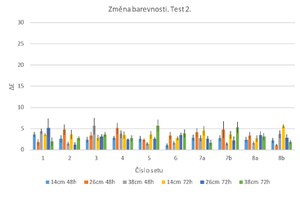
Fig. 8 Overall colour change ∆E of all sets of Test 2. Exposure time: 48/72 hours. Distance from butanol sources: 14/26/38 cm.
Table 3 Comparative macro- and microimages of Test 2 samples made using the VSC (upper part of images) and the 3D digital microscope. Comparison of pre-exposure samplse with post-exposure results. For the demostration, the exposure time is 48/72 hours and the distance from butanol sources is 14/38 cm. (A. Kazanskii, National library of the Czech Republic).
Results of Test 3:
The measurement of colour change in this test was complicated by the presence of a thick, gradually evaporating layer of cyclododecane on the surface of the recording media. This factor affected the reproducibility of the measurements and the resulting standard deviation values. The average values of ∆E in Test 3 differed only to a minimum extent from the results of Test 1, which indicates that under such conditions cyclododecane fixation can be considered as a less effective protection measure against the undesirable effects of disinfection (see Fig. 8).
As a result of exposure, all silver ink pencils underwent significant and clearly visible colour changes, with ∆E values exceeding 15. For the Mephisto purple ink pencil (set 2), the ∆E value reached approximately 8. The inks were bleeding regardless of the distance of the samples from the butanol sources and the exposure time. These results are evident in macro- and micro-photographic documentation (see Table 4). Minor colour changes were observed in coloured ink pencils (sets 7-8), with ∆E values ranging from 5 to 10. They also did not bleed during the test.
For stamp ink from set 9, there was still some ink bleeding during the exposure. For liquid fountain pen ink and stamp inks (sets 10-12), like in Test 1, the lowest degree of colour changes in the range ∆E from 2 to 8 and minimum degree of bleeding were observed (see Table 4).
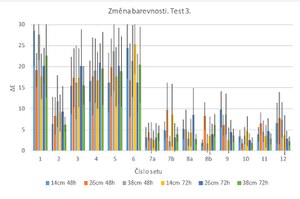
Fig. 9 Overall colour change E of all sets of Test 3. Exposure time: 48/72 hours. Distance from butanol sources: 14/26/38 cm.
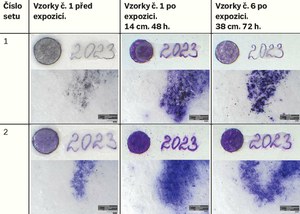
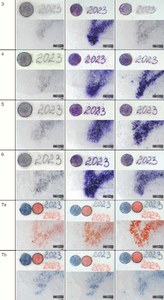
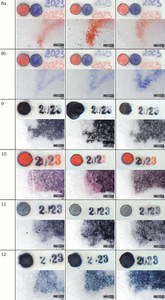
Table 4 Comparative macro- and microimages of Test 3 samples made using the VSC (upper part of the images) and the 3D digital microscope. Comparison of pre-exposure samples with post-exposure results. For the demonstration, the exposure time is 48/72 hours and the distance from butanol sources is 14/38 cm. (A. Kazanskii, National Library of the Czech Republic)
Results of Test 4:
Ink fixation in Test 4 using 1.2% Mesitol NBS solution and 6% Rewin EL solution can be considered as a partially effective method to protect against the adverse effects of disinfection. Unlike in Test 1, in which the inks were not fixed, the resulting average ∆E values for silver ink pencils (sets 1-6) in Test 4 were lower and dependent on the distance from the butanol sources. With an exposure time of 72 hours and a distance of 38 cm, the values for the silver ink pencils were below ∆E = 5.8, and below ∆E = 2.2 for the purple ink pencil (set 2). For the coloured ink pencil (set 7), there was an even smaller colour change, where the average value of ∆E reached 3. Unlike in Test 1, none of the ink pencils underwent bleeding. In the case of the stamp ink (set 9), it did not bleed during the exposure only at a greater distance from the butanol sources (28–38 cm). The stamp ink (set 11) measured showed lower to medium colour changes ∆E in the range from 1.1 to 3 (see Fig. 9).
For the ink pencil (set 8), fountain pen ink (set 10), and stamp ink (set 12) sets, there was considerable bleeding during fixation by immersion in the Revin or Mesitol NBS solutions, which made it impossible to achieve reproducible results. In sets 6, 7 and 11, a slight but still undesirable bleeding was observed during fixation, as can be seen in the photographic documentation (see Table 5). Such reactions of the recording media constitute a fundamental flaw in the method. Based on the tests conducted, it has been shown again that before each application of solutions of the Mesitol NBS and Rewin fixatives, it is necessary to conduct combined solubility tests and, if necessary, use solutions with different concentrations adapted to specific types of recording media (Bredereck 1988).
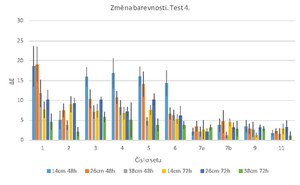
Fig. 10 Overall colour change ∆E of all sets of Test 4. Exposure time: 48/72 hours. Distance from butanol sources: 14/26/38 cm.
Table 5 Comparative macro- and microimages of Test 4 samples made using the VSC (upper part of the images) and the 3D digital microscope. Comparison of pre-exposure samples with post-exposure results. For the demonstration, the exposure time is 48/72 hours and the distance from butanol sources is 14/38 cm. (A. Kazanskii, National Library of the Czech Republic)
Conclusion
Silver ink pencils proved to be the most problematic group of recording media that were tested. Under normal disinfection conditions, such inks significantly change colour and bleed, regardless of the distance from the source of butanol. Where silver ink pencils are water-activated before writing, a greater distance from the butanol source may reduce the rate of their bleeding and prevent further significant discolouration. A combination of Mesitol NBS and Revin EL solutions can be used to fix silver ink pencils, which reduces possible discolouration and minimises bleeding of recording media during disinfection. However, it is essential to carefully select the concentration of the solution and the method of its application. It is also recommended to perform a solubility test to avoid damage to the record. Purple ink pencils showed similar behaviour to silver ink pencils during the test, but the colour changes were less pronounced. Even smaller colour changes were observed with coloured ink pencils, such as red and blue. Such recording media showed moderate colour changes with no signs of bleeding.
Stamp inks and ink for fountain pens demonstrated significantly higher stability compared to silver ink pencils in the standard disinfection procedure. Such recording media showed a significantly lower colour change and most of them did not bleed. On the other hand, it has been shown that the fixation of these recording media using a combination of Mesitol NBS and Revin EL solutions bears a considerable risk due to the high probability of their dissolution during fixation. The ink for NORIS stamps (set 9) deserves special attention. Unlike other stamp inks, it showed significant bleeding during disinfection, with the degree of bleeding depending on the distance from the butanol source in the chamber.
The fixation method using cyclododecane proved to be ineffective in preventing changes in recording media during standard disinfection.
The tests conducted are only a simulation of the actual disinfection process, where other factors affect the activation of dyes in older records. Real-life aged records may have different environmental interaction characteristics and the dyes contained in them may be in a different chemical state as a result of natural aging. Therefore, further research will continue to test the interaction of naturally aged records with butanol vapours.
Bibliography:
BACÍLKOVÁ, Bronislava, 2015. Studium účinků par butanolu a jiných alkoholů na plísně. Online. Praha: Národní archiv. Available at https://old2.nacr.cz/wp-content/uploads/2015/11/butanol.pdf. [accessed on 2024-01-11].
BREDERECK, Karl a SILLER-GRABENSTEIN, Almut, 1988. Fixing of ink dyes as a basis for restoration and preservation techniques in archives. Restaurator. Issue 9, pp. 113-135.
ĎUROVIČ, Michal, 2022. Restaurování a konzervování archiválií a knih. Praha: Paseka. ISBN 80-7185-383-6.
ĎUROVIČ, Michal; DENDEROVÁ, Michaela; MATUŠÍK, Jan a STRAKA, Roman, 1999. Fixace novodobých psacích prostředků syntetickými polymery – studium odstranitelnosti a fyzikálně-chemických vlastností některých vybraných fixačních prostředků. In: X. seminář restaurátorů a historiků: Referáty. Litomyšl, 24.–27. září 1997. Praha: Pobočka ČIS při Státním ústředním archivu v Praze, p. 248.
KARBOWSKA-BERENT, Joanna, 2014. Dezynfekcja chemiczna zabytków na podłożu papierowym – skuteczność i zagrożenia. PDF. Toruň: Wydawnictwo Naukowe Uniwersytetu Mikołaja Kopernika. ISBN 978-83-231-3088-8.
KARBOWSKA-BERENT, J. et al., 2018. The initial disinfection of paper-based historic items – Observations on some simple suggested methods. Online. International Biodeterioration & Biodegradation. Vol. 131, pp. 60-66. ISSN 0964-8305. Available at https://doi.org/10.1016/j.ibiod.2017.03.001 [accessed on 2024-01-11].
MAKOVÁ, Alena a HAFKOVÁ, Zuzana, 2019. Záznamové prostriedky a možnosti ich fixácie pre vodné konzervačné procesy. Bratislava: MV SROV. p. 6-16. ISBN 978-80-971767-5-4.
ORLITA, Alois, 1991. Nový systém devitalizace plísní na historických písemnostech. In: Sborník 8. semináře restaurátorů a historiků, Železná Ruda – Špičák. Praha: Státní ústřední archiv v Praze. pp. 258-267.
PAULUSOVÁ, Hana, 2003. Využití cyklododekanu pro přechodnou fixaci vodorozpustných barviv. In: XI. seminář restaurátorů a historiků: Referáty, Litoměřice, 13.–16. 9. 2000. Praha: Státní ústřední archiv v Praze. pp. 250-255.
ZMEŠKAL, Oldřich; ČEPPAN, Michal a DZIK, Petr, 2002. Barevné prostory a správa barev. Online. Vysoké učení technické v Brně. Available at http://imagesci.fch.vut.cz/download/stud06_rozn02.pdf. [accessed on 2024-01-11].
KAZANSKII, Andrei; ZEMBJAKOVÁ, Rebeka a NEORALOVÁ, Jitka. Stability of Ink Pencils and Stamps in Butanol Vapors during Standard Disinfection Procedures. Knihovna: knihovnická revue. 2024, Vol. 35, Issue 2, p. 85–107. ISSN 1802-8772.
Translated by Martin Katuščák